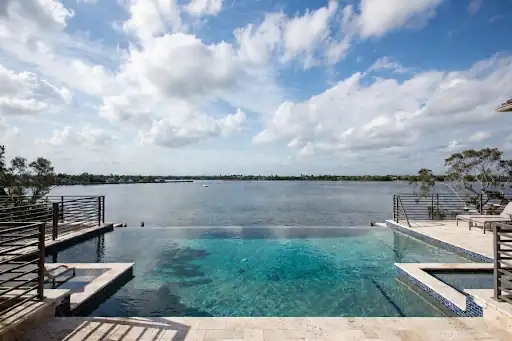
An infinity edge pool can be one of the most striking luxury pool designs for a Florida home, especially on a property with a lake, ocean, canal, golf course, or elevated view. The design makes the water appear to disappear into the horizon, creating a clean, resort-caliber look that few other pool styles can match.
But an infinity edge pool is not the right fit for every backyard. These pools cost more than standard designs, require more planning, and need careful engineering to hold up in Florida’s soil, weather, and permitting environment. Here is what actually makes one work, and how to know if your property can support it.
Key Takeaways
- Infinity edge pools are best for Florida homes with strong views, such as waterfront, lakefront, coastal, elevated, or golf course properties.
- They cost more than standard pools because they require a catch basin, extra plumbing, pumps, drainage planning, and precise construction.
- Florida’s sandy soil, high water table, heavy rain, and coastal conditions make proper engineering essential.
- Most projects require permits, safety barrier compliance, and sometimes HOA or coastal approvals.
- Infinity edge pools need more maintenance because of evaporation, water-level control, catch basin cleaning, and water chemistry.
- They may not be worth the cost on flat lots with no view or yards blocked by fences, trees, or neighboring walls.
- Hiring an experienced Florida pool contractor is one of the most important decisions homeowners can make.
What Is an Infinity Edge Pool?

An infinity edge pool, also called a vanishing edge or negative edge pool, is designed so water flows over one lowered side of the pool, falls into a hidden catch basin below, and gets pumped back into the main pool. The result is a smooth visual effect where the pool appears to blend directly into the horizon.
The design looks simple from the outside, but the system behind it is genuinely more complex than a traditional pool, with one edge built slightly lower than the water level, a catch basin collecting the overflow, and a pump continuously returning water to the main pool.
Why Infinity Edge Pools Are Popular in Florida
Florida is one of the best places in the country for infinity edge pools, since so many homes are built around outdoor living and scenic views. A vanishing edge can make a pool feel like it connects directly to a lake, canal, ocean, conservation area, or golf course.
Homeowners choose them because they create a high-end resort-style look, make the backyard feel more open, highlight waterfront or elevated views, pair beautifully with outdoor kitchens and fire features, add a relaxing sound from the moving water, and even help skim surface debris as water flows over the edge. For the right property, an infinity edge pool becomes the defining feature of the entire backyard.
What Types of Florida Properties Are Best for Infinity Edge Pools?
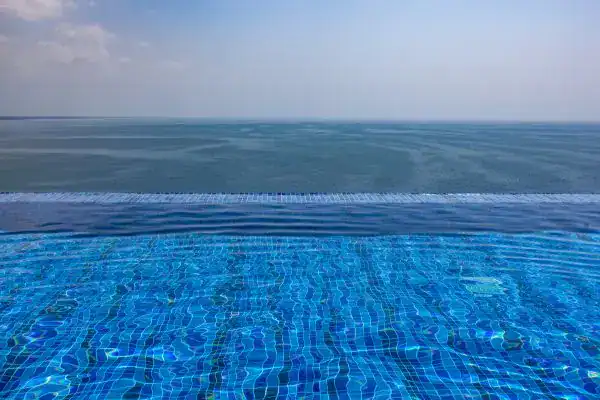
Infinity edge pools work best when there is a natural view or elevation change, since the visual effect depends entirely on what the eye sees beyond the pool edge. The best-suited properties include:
- Waterfronts
- Lakefronts
- Canal-fronts
- Coastal homes
- Golf course properties
- Homes with conservation views
- Sloped lots
- Elevated backyards
- Luxury homes with open sightlines
A sloped or elevated lot is especially helpful, since it lets the catch basin sit below the main pool and stay hidden from view.
Infinity edge pools are far less practical on flat yards with no view, or where a fence, neighbor’s wall, dense trees, or other obstruction blocks the vanishing edge. In those cases, the design may not deliver enough visual payoff to justify the added cost.
How Is an Infinity Edge Pool Different from a Standard Pool?
A standard pool keeps the water inside one main shell. An infinity edge pool needs a second water-collection system below the overflow edge. It typically requires a precisely built overflow edge, a lower catch basin or surge tank, extra plumbing, additional pumps, water-level controls, and far more detailed drainage planning and construction precision.
An infinity edge pool is not simply a pool with a prettier edge. It is a more advanced system that has to be designed correctly from the very first sketch.
Florida-Specific Factors Homeowners Should Know
Building an infinity edge pool in Tampa takes careful planning, since local conditions genuinely affect the structure, drainage, and long-term performance.
Sandy or loose soil is common across much of the state, and if it shifts after construction, it can throw off the pool shell and the level of the overflow edge. Even small settling makes water flow unevenly.
Florida’s high water table adds pressure around an in-ground pool, especially in low-lying, coastal, or waterfront areas.This is exactly where an experienced contractor recommends engineering solutions to protect the structure.
Heavy rain, tropical storms, and hurricanes all demand proper drainage so the catch basin, deck, and surrounding yard don’t flood or erode.
Coastal properties face additional considerations like salt air, wind exposure, erosion, and stricter construction rules, sometimes requiring extra engineering and permitting near protected coastal areas.
The core principle stays the same across all of it: the pool needs to be designed for the specific property, not copied from a photo.
Permits, HOA Rules, and Safety Requirements
Most infinity edge pool projects in Tampa require permits, with exact requirements depending on the city, county, property type, and location. Homeowners may need local building permits, electrical permits, plumbing inspections, pool safety barrier compliance, HOA or architectural review approval, waterfront or coastal approvals, and additional review if the property sits near the Coastal Construction Control Line.
Florida also has real, enforceable residential pool safety requirements. Under the Residential Swimming Pool Safety Act, every new residential pool, infinity edge or otherwise, must include at least one approved safety barrier:
- Compliant fence
- Safety cover
- Door and window alarms
Any pool that does not have at least one of these can automatically have any pool fail final inspection.
If the home sits in an HOA community, approval is often needed before construction begins, and HOAs may have their own rules about pool size, placement, decking, screen enclosures, fencing, and visibility. For coastal or beachfront properties, permitting can take longer given environmental and shoreline protection review.
How Much Does an Infinity Edge Pool Cost in Florida?
Infinity edge pools cost more than standard pools because they are genuinely more complex to design and build. According to Angi’s national cost data, infinity pools start at $200,000. For a luxury pool with premium features, and Tampa’s luxury custom market, driven by strong local demand and site complexity, commonly lands at the higher end of that range or beyond once a full outdoor living space is included.
The biggest cost factors include:
- Pool size and shape
- Site slope or grading needs
- Catch basin construction
- Structural engineering
- Drainage planning
- Retaining walls
- Extra plumbing and pumps
- Pool finish, tile, and coping
- Lighting and automation
- Integrated spa or tanning ledges
- Outdoor kitchen or hardscape work
- Screen enclosure design
- Coastal or HOA permitting requirements
Interestingly, a flat lot can sometimes cost more than a naturally sloped one, since the builder may need to create elevation changes through grading, retaining walls, or raised construction. The most reliable way to understand real pricing is having a qualified pool contractor inspect the actual property and explain what the site specifically requires.
Do Infinity Edge Pools Require More Maintenance?
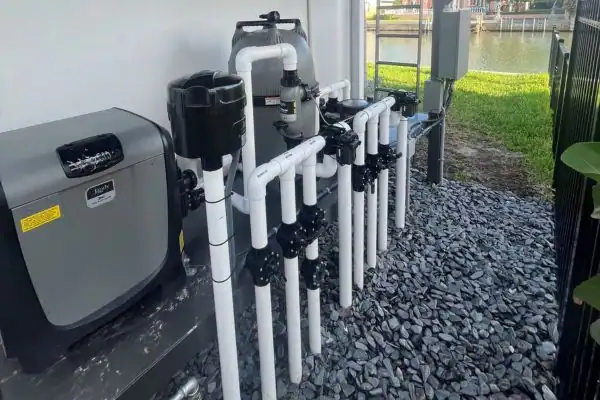
Yes, infinity edge pools generally require more maintenance than traditional pools. Because water is constantly moving over the edge, expect more evaporation, more water-level monitoring, catch basin cleaning, pump and equipment maintenance, closer attention to water chemistry, possible calcium scale along the overflow edge, and debris collecting in the lower basin.
The catch basin deserves special attention, since it collects overflow water along with leaves, pollen, insects, and other debris. If it isn’t cleaned regularly, it can affect water quality and strain the equipment. Moving water also increases evaporation and makes pH and calcium scale harder to manage, especially in Tampa’s heat. Automation genuinely helps here, and many homeowners rely on auto-fill systems, smart controls, and regular professional service to keep the whole system easier to manage.
Common Problems with Poorly Designed Infinity Edge Pools
A well-built infinity edge pool looks smooth, quiet, and balanced. A poorly designed one creates problems that are expensive to fix later, including:
- Uneven water flow over the edge
- Dry spots along the overflow wall
- Excessive water loss
- Catch basin overflow
- Pumps running dry
- Noisy water flow
- Poor drainage around the pool
- Calcium scale buildup
- Structural settling
- Edge that simply fails to create the intended “infinity” look
Many of these problems trace back to a catch basin that’s too small, an edge that isn’t level, drainage that wasn’t planned correctly, or a builder without real experience in infinity edge construction specifically. This is exactly why contractor experience matters so much for this particular pool style.
Screen Enclosures and Infinity Edge Pools
Many Florida homeowners want a screen enclosure for mosquitoes, leaves, and outdoor comfort, but a standard pool cage can interrupt the very view that makes an infinity edge pool worthwhile.
Traditional enclosures often have vertical posts and horizontal bars that break up the sightline, so if the view is the whole reason for choosing this pool style, the enclosure needs to be planned early rather than added as an afterthought. A panoramic or “infinity view” screen enclosure uses far fewer visual obstructions, helping preserve the open look while still delivering the benefits of a screened pool area.
Questions to Ask Before Building an Infinity Edge Pool
Before hiring a contractor, ask the following questions:
- Are they licensed and insured in Florida?
- How many infinity edge pools have they actually built?
- Can you see completed examples?
- Do the designs genuinely work with your property and view?
- Does your lot need soil testing or engineering
- How will drainage and the catch basin be sized?
- What permits and HOA approvals are required?
- Do coastal or waterfront restrictions apply?
- What maintenance should you expect?
- What warranties are included?
A good contractor should be able to explain the design, permitting, drainage, equipment, and maintenance in plain, clear language, not vague reassurances.
Is an Infinity Edge Pool Right for Your Florida Home?
An infinity edge pool tends to be a strong choice when your home has a genuine view, your lot has slope or elevation, you want a true custom luxury pool, you’re prepared for a higher budget, you understand the added maintenance, and you’re working with an experienced Florida pool builder. It may not be the best fit if your yard is flat with no view, a fence, wall, trees, or enclosure will block the effect, you want the simplest possible pool design, you want the lowest-maintenance option, your budget is tight, or your site conditions would make the project too costly to justify.
For many Florida homeowners, an infinity edge pool earns its cost when the property can fully support the design. If the view is limited or the site needs excessive extra work, another custom pool style may simply deliver better value for the same investment.
Frequently Asked Questions
What makes an infinity edge pool different from a regular pool?
It includes a lowered edge where water spills into a hidden catch basin and gets pumped back into the pool, creating a visual effect where the water appears to blend into the horizon. This requires additional engineering, plumbing, and precise construction beyond a standard pool shell.
How much does an infinity edge pool cost in Florida?
Nationally, infinity pools average around $95,000, ranging from about $55,000 to $200,000 or more. Florida’s luxury custom market tends to run toward the higher end of that range once a full outdoor living space is included.
Do all properties work for an infinity edge pool?
No. They work best on waterfront, elevated, or sloped lots with an open view. Flat yards with no view, or those blocked by fences, walls, or trees, generally don’t deliver enough visual impact to justify the added cost.
Are infinity edge pools harder to maintain?
Yes. They require more attention to evaporation, water-level monitoring, catch basin cleaning, and water chemistry than a standard pool, though automation and regular professional service make this manageable.
Do infinity edge pools need special permits in Florida?
Most projects need standard building, electrical, and plumbing permits plus pool safety barrier compliance, and some coastal or HOA-governed properties may need additional review and approval.
Bringing an Infinity Edge Pool to Life on Your Tampa Property
An infinity edge pool is one of the rare luxury pool designs that genuinely rewards a property with the right view, turning a natural asset like a lake, canal, or elevated lot into the defining feature of the whole backyard. But getting there depends entirely on the engineering behind the visual effect, the catch basin sizing, the drainage planning, and a builder who has actually solved these problems before, not just seen a photo of one.
That precision is exactly what Grand Vista Pools brings to every infinity edge project across Tampa Bay. As a custom pool builder serving Clearwater, Tampa, Palm Harbor, Dunedin, Odessa, and Lutz, we design the structure and hydraulics as one system so the vanishing edge actually holds up for decades, not just for the first season. If your property has a view worth framing, explore our custom pool construction process or request a consultation to find out what an infinity edge could look like on your lot.